Humane Care of Cows: What They Need to be Happy and Healthy
Time Spent Grazing
Socializing With Other Cows
Factory Farming of Cows for Meat and Dairy Production
Expression of Maternal Behavior

Veal
Lying Down and Ruminating (chewing their cud)

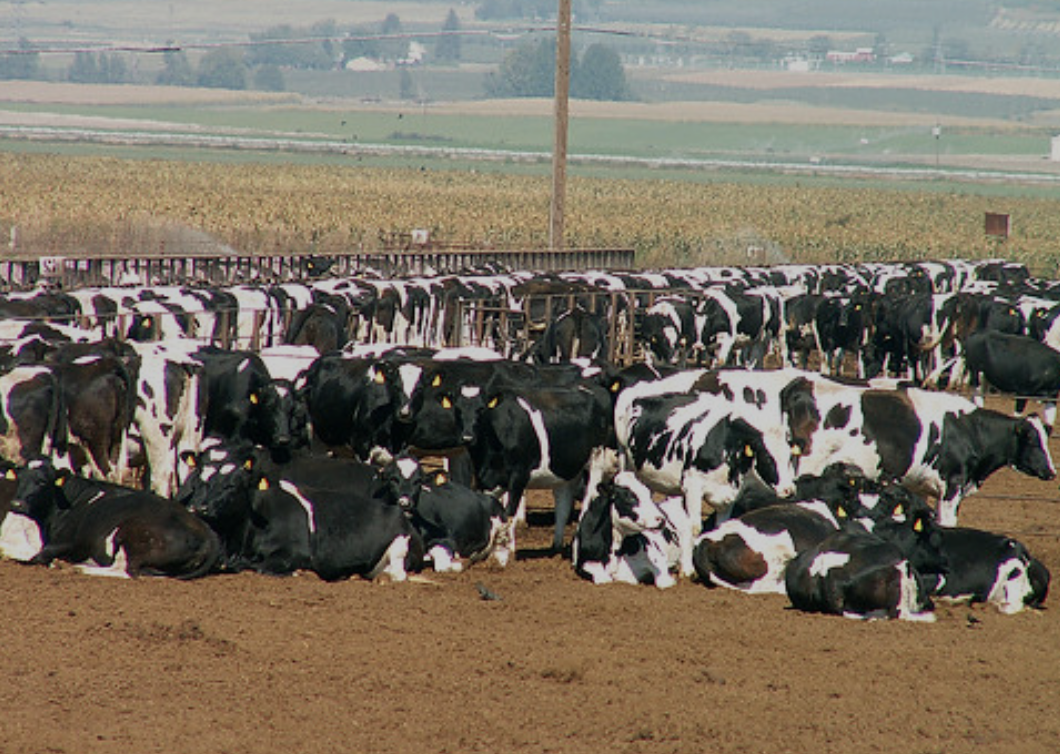
On factory farms cows live in crowded, often filthy conditions without access to grazing. The focus is on high-volume production and profit.
The majority of beef cows are raised on feedlots where they are fattened prior to being sent to slaughter. Larger feedlots hold tens of thousands of cows at a time in crowded conditions.
How Beef Gets From the Factory Farm to Your Table
STEP TWO: The cows are run through a “slaughter box” in which their heads are immobilized. A worker puts a stun gun to the cow’s head and pulls the trigger, sending a bolt into the cow’s brain. When done correctly, the bolt causes loss of consciousness.
STEP THREE: The unconscious animals are suspended by their hind legs and blood vessels in the neck are sliced. Blood loss is the cause of death.
STEP FOUR: The animals are butchered (cut up into pieces) before being distributed for consumption.
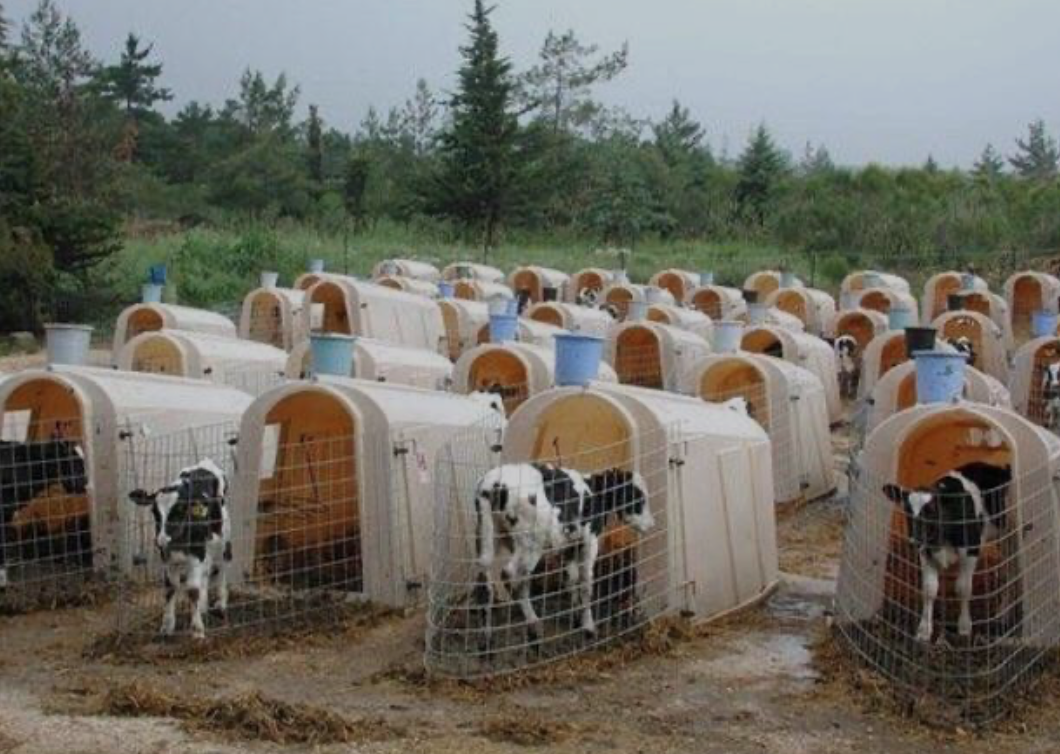
On dairy farms, male calves serve no purpose. Within hours of birth, they’re transported to veal farms where they consume a purely liquid diet and are confined to a small space that allows minimal movement. This is so their muscles (meat) stay extremely tender—the hallmark of veal. At 16 to 18 weeks of age, they’re sent to slaughter.

Dairy cows are forced to give birth every year which maximizes their milk production. Cows not on dairy farms produce approximately 270 gallons of milk to feed their calves over the course of ten months. A dairy cow manufactures 3,000-5,000 gallons per year.
In order to maximize the amount of milk dairy cows produce, their calves are taken away from them within hours of birth. This causes psychological distress for mamas and their offspring.
Given the demands on her body, by the time a milk cow reaches 6-7 years of age, she can no longer calve yearly and produce abundant milk year-round. When this happens, she is typically sold for meat.
STEP ONE: Trucks transport the cows to the slaughter house. Overcrowding of animals on the truck adds to the stress of travel for them.